Skip to content

News
An amazing, and little known medical scientist from Miles City, Montana – Kind and Gentle Souls around the World
November 20, 2026/
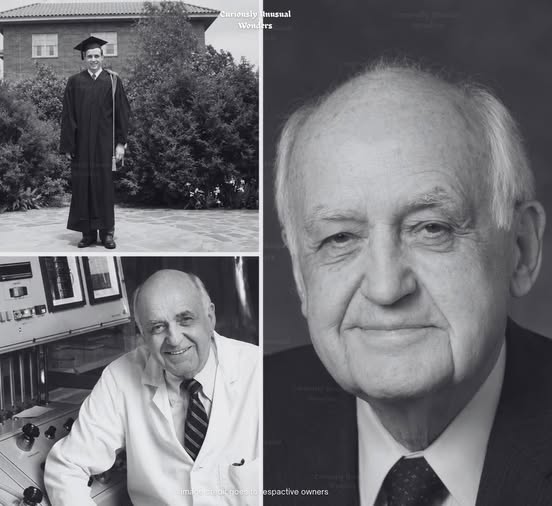
Amazing persistence and lack of financial incentive. The world owes him a Nobel at a minimum.
In 1963, a forgotten medical scientist placed a vial in a Pennsylvania freezer. It bore his five-year-old daughter’s name. He was about to use it to dismantle the diseases of the twentieth century.
He was born in 1919 on a farm near Miles City, Montana.
His twin sister died during birth. His mother died two days later. He was raised by his aunt and uncle in an isolated farmhouse that relied on wood stoves and manual labor.
In the 1920s, the plains offered a harsh education in mortality. Miles City was remote. The nearest major hospital was a train ride away. Diphtheria swept through the local schools in the winter. Families watched helplessly as children developed thick, gray membranes in their throats and suffocated in their beds.
The local doctor carried a black bag filled with cold compresses, whiskey, and sympathy. Nothing else.
He learned early that nature was not benevolent. It was a biological machine that required dismantling. He spent his childhood raising chickens, cleaning coops, and watching how sickness moved through a flock.
Fifty years later, those Montana chicken eggs would become the foundation of his laboratory.
He left the farm. He earned a scholarship to the University of Chicago. He studied microbiology.
In April 1957, working at the Walter Reed Army Institute of Research, he read a short article in the newspaper. A severe influenza outbreak was overwhelming clinics in Hong Kong.
Thousands of children were lining up at medical tents with glassy eyes and high fevers.
He sent a cable to a military medical officer in Japan. He requested a saliva sample from an infected patient. The sample arrived at Walter Reed a week later.
He analyzed the viral strain. He cross-referenced it against the blood serum of Americans. Nobody in the United States had antibodies for it. The population was entirely vulnerable.
He looked at the calendar. He calculated the speed of global shipping lanes.
He told his superiors a pandemic would hit the American mainland by the first week of September.
The military brass told him he was overreacting. The World Health Organization dismissed his timeline.
He ignored them. He bypassed the federal bureaucracy entirely.
He contacted the six largest pharmaceutical manufacturers in the country. He sent them frozen virus samples. He told them to halt their standard production lines and begin manufacturing millions of doses of a new vaccine immediately.
He contacted the nation’s poultry farmers. He told them not to slaughter their roosters. The manufacturers were going to need millions of fertilized eggs to incubate the virus.
The manufacturers took the financial risk. They began production without government authorization.
The Asian Flu arrived in the United States in the first week of September.
Because of his unauthorized push, forty million doses of the vaccine were already shipping to hospitals across the country. The virus killed seventy thousand Americans. Public health records estimate it would have killed one million without the intervention.
He didn’t stop to celebrate. He moved to a new laboratory in West Point.
Records from the Division of Biologics Standards in the early 1960s show a regulatory framework vastly different from modern protocols. Researchers possessed the authority to move from viral isolation to human trials in a matter of months, relying heavily on their own clinical judgment rather than decades-long bureaucratic phasing.
In March 1963, his oldest daughter, Jeryl Lynn, woke up at one in the morning.
Her jaw was swollen. Her throat burned. She had the mumps.
He put on his coat, drove to his laboratory, and retrieved a sterile cotton swab. He drove back to his house, wiped the swab against the back of her throat, and placed it in a vial of nutrient broth.
He drove the sample back to the lab. He placed it in the deep freeze.
Then the long work began.
To create a live-attenuated vaccine, a researcher must weaken the virus until it triggers an immune response without causing the disease.
He passed the Jeryl Lynn strain through a culture of chick embryo cells.
The virus replicated. It remained aggressive.
He passed it through the cells a second time. It was still too strong.
He passed it a third time. A fourth.
He repeated the process week after week. Each passage forced the virus to adapt slightly to the chicken cells, making it progressively worse at infecting human cells.
Maurice Hilleman was not a gentle man.
He swore in meetings with corporate executives. He ran his laboratory with military strictness. He kept a row of replica shrunken heads on his desk, telling new technicians they belonged to the last assistants who mislabeled a test tube.
If a researcher complained about a fourteen-hour shift, he calmly reminded them that the viruses they were fighting did not take weekends off.
He passed the mumps virus through the chicken cells a twelfth time. Then a fifteenth.
He demanded absolute precision. The margins for error were zero.
By the seventeenth passage, the virus was significantly weakened. He tested it in animal models. It held.
He needed to test it on a human subject to prove it produced antibodies. He drew up a dose of the experimental vaccine. He injected it into the arm of his younger daughter, Kirsten.
She did not develop the mumps. Her blood produced a profound immune response.
The vaccine was officially licensed in 1967. It became the global standard. The strain inside every modern MMR shot is still the one he swabbed from Jeryl Lynn’s throat.
He went after measles and mumps together. He went after rubella. He combined all three into a single injection.
In 1981, he developed the first vaccine for hepatitis B.
He harvested blood from infected patients in New York City. He subjected the plasma to a brutal chemical purification process using pepsin, urea, and formaldehyde.
The scientific community told him it was reckless to inject purified human blood into healthy patients.
The clinical trials proved it was completely safe. It became the first vaccine in history to effectively prevent a cancer, stopping the liver carcinomas caused by the hepatitis B virus.
He developed a vaccine for chickenpox. He developed a vaccine for meningitis.
He developed over forty vaccines in his career. Eight of the fourteen standard shots given to children today originated on his lab bench.
He retired in 1984, forced out by a corporate mandatory retirement policy. He spent his final years advising global health organizations. Today, this forgotten medical scientist is largely absent from history textbooks.
He held no patents for the vaccines he invented. The corporation held the rights. The corporation sold the vials. He drew a standard laboratory salary for his entire career.
He rarely gave interviews. He refused to hire a publicist.
He didn’t put his name on the vial. He just put the cure inside it.
The global medical consensus estimates his laboratory’s work saves eight million lives every single year. The diseases that emptied classrooms and filled pediatric wards in the 1920s are now historical footnotes. He died in 2005 at the age of eighty-five. He is buried in a standard plot in a Pennsylvania cemetery. The grass around the stone is cut every other Tuesday./
Maurice Hilleman: the man who erased the diseases of childhood.
Source: Dr. Paul Offit, “Vaccinated: One Man’s Quest to Defeat the World’s Deadliest Diseases.”
Verified via: The Smithsonian Institution Archives, The National Institutes of Health historical records.
(Many thanks to Alexis V. for sharing)